


Fred McKinney
Fred McKinney (opinion): The U.S. economy is not in a good place

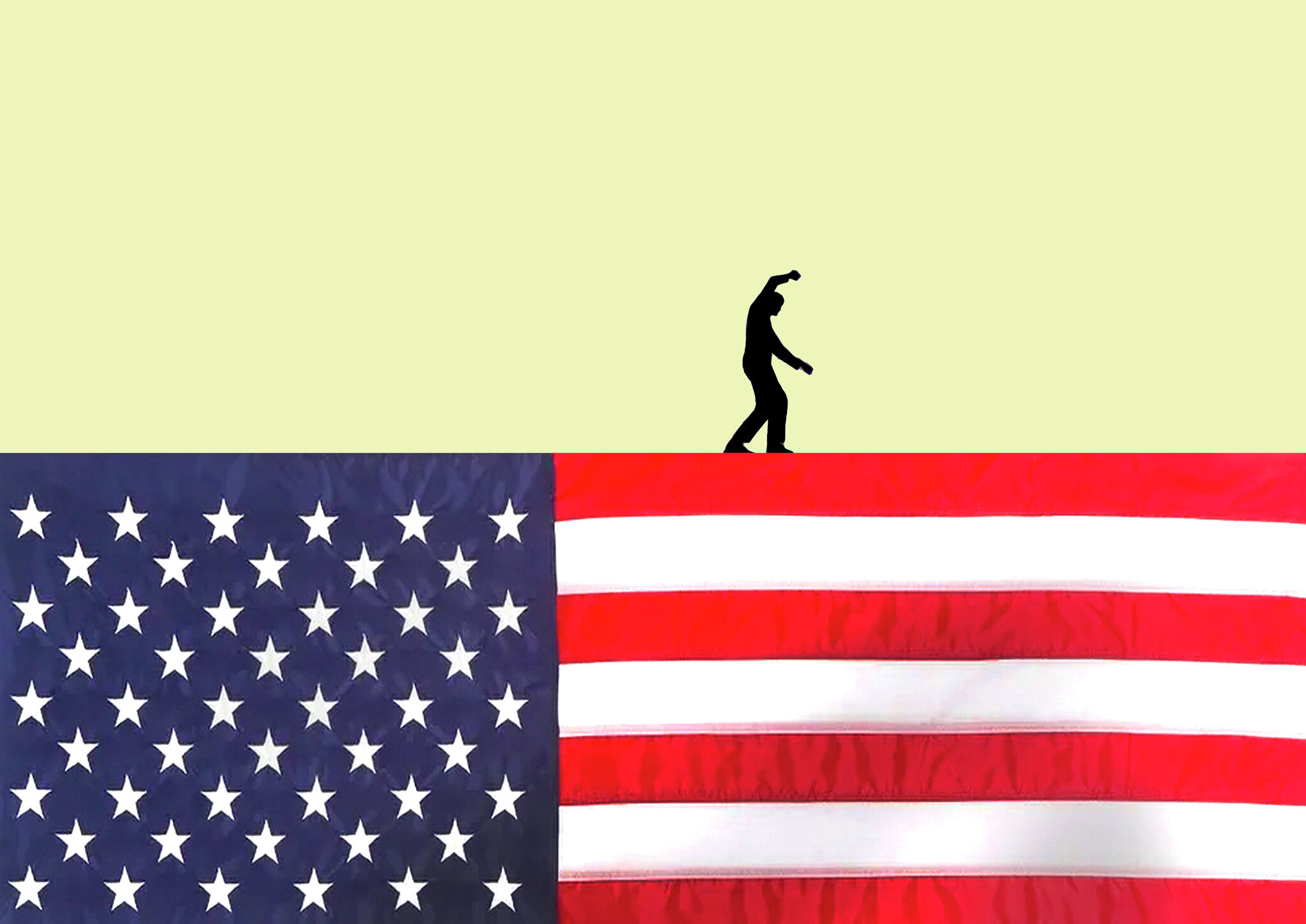
The uncertainty of the U.S. economy.
Westend61/Getty Images/Westend61
'History does not repeat itself, but it does rhyme.'
Mark Twain
Advertisement
Article continues below this ad
The current economic condition of the U.S. economy is best described as uncertain. Economic indicators such as employment from the survey of businesses shows that employment growth has slowed. In July, it declined by 23,000. The consumer price index for July indicates prices are still elevated and increasing in key markets such as oil, food, health care, rent, and transportation. The stock market, on the other hand, is exhibiting surprising strength with new records for all the major indices driven by strong earnings and the hope of future interest rate reductions by the Federal Reserve. These current conditions are echoes of the period between 1973 and 1976.
In October of 1973, Syria and Egypt attacked Israel in what is known as the Yom Kippur War. This 21-day conflict pitted Israel and its arms supplier, the United States against Syria and Egypt and their arms supplier the Soviet Union. The conflict ended because of high-level bilateral and multilateral negotiations involving the United Nations, the EU, the Arab states, and the warring parties.
The fallout of this war led the Arab members of the Organization of Petroleum Exporting Countries (OPEC) to impose an oil embargo on the United States, Portugal, South Africa, Canada, Japan, the Netherlands, the United Kingdom, and Rhodesia. Interestingly in a reversal of roles, Iran, under the Shah, did not support the embargo and continued to supply oil to the embargoed countries. The OPEC embargo led to a quadrupling in the price of a barrel of oil from $3 a barrel to $12 a barrel.
Advertisement
Article continues below this ad
The Hour Logo
Want more Norwalk Hour?
Make us a Preferred Source on Google to see more of us when you search.
Add Preferred Source
This oil-price shock led to shortages of oil and gas globally. I am old enough to remember waiting in line to get a few gallons of gas in early 1974. I was living in California at the time attending U.C.L.A. The state imposed odd/even gas rationing that allowed cars with license plates ending in an even number to get gas on one day and cars with license plates ending in odd numbers allowed to get gas on the next day. And even this system did not eliminate the lines or the price increases.
The situation today is not the same as 1973-76. However, wars involving Israel and its neighbors and our support for Israel are at the center of the political and economic crisis. In both the earlier period and now, oil supplies have been disrupted by an OPEC member. This time instead of being the Arab OPEC members it is Iran that is doing the disruption. The question we do not have an answer for is whether this war-generated oil crisis will lead to economic conditions like those in 1973-76.
The 1973 OPEC embargo, along with some significant changes in monetary policy, specifically the United States leaving the gold standard, the imposition of price and wage controls, and fiscal hangover from the Vietnam War, led to the stagflation of 1974-75. Unemployment rates increased from 4.6% in October 1973 to 9% in May 1975 and did not bottom out until June of 1979 at 5.7%. Inflation increased from 3.3% in 1972 to more than 11% in 1974, driven by oil and food price increases. My first home mortgage had a rate of 12.5% in 1983.
Advertisement
Article continues below this ad
The similarities between 1973-1976 are striking. Oil prices have not quadrupled like in 1973, but they have increased from $64 a barrel to a peak of $126 per barrel in late April, almost a doubling in the price. Prices have since come down but they continue to fluctuate 30-40% higher than pre-war levels. Long-term interest rates and mortgage rates have not reached the highs of the late 1970s, but they are rising. The federal debt was a growing concern during the period and led directly to the election of Ronald Reagan. Today the federal debt is $40 trillion compared with $620 billion in 1976. In 1976, federal debt was 33% of GDP. Today, our federal debt is a record 125% of GDP.
Energy price increases have spilled over into food prices and other energy sensitive product prices. Job growth has slowed to a crawl with last month experiencing the first monthly decline in jobs since February when monthly nonfarm payroll jobs declined by 92,000. The increase in inflation and the soft job market is reminiscent of the stagflation of 1974-75.
The 1973-76 period put the nation on a course of 'energy independence.' Yet despite accomplishing this goal, American consumers still feel the repercussions of Middle East oil supply shocks. One of the promises of 'drill baby drill' and energy independence was that oil supply disruptions emanating from the Middle East would not destroy our economy. Promises made, promises unkept!
Stagflation, unlike periods of inflation without increases in unemployment or periods of increases in unemployment with no inflation, creates a difficult problem for the Federal Reserve. The FED typically can slow inflation by raising interest rates. But raising interest rates while employment markets are not growing makes that problem worse. The FED typically can address rising unemployment by lowering rates, but by lowering rates while inflation is high, leads to more inflation.
Advertisement
Article continues below this ad
The problem for the White House is even worse, particularly in an election year. Fiscal policy during rising unemployment periods calls for reductions in taxes and increases in federal spending. However, doing that would make inflation and the nation's deficit and debt worse than it already is. The Republican's 'Big Beautiful Bill' will add more than $3.4 trillion to the national debt over the next 10 years. Fiscal policy to address rising prices typically calls for politically unpalatable solution — tax increases to slow the economy down. Because fiscal policy requires a languid Congress to pass legislation, fiscal policy is a blunt and often ineffective tool when addressing inflation and unemployment in the short term.
Faced with no fiscal or monetary policy magic bullets, there are some fixes to the current problem. First, if oil prices come down because of successful political negotiations, a reduction in inflation and calm could return to markets. The decline in oil prices requires the war to end. This leaves the second, and unfortunately, the only other alternative which is for the economy to take the bitter pill of recession. Nixon tried a third alternative. He imposed price controls on Aug. 15, 1971, in response to price increases anticipated with his decision to sever the relationship between the value of the dollar and the value of gold. Price controls did not work then and probably made the 1974-75 recession worse. Hopefully we learned that lesson. It took nearly a decade for this economic policy error to be fixed.
Unfortunately for American consumers and workers, the U.S. economy is not in a good place, despite the president's protestations that the United States is 'the hottest economy in the world.' My recommendation is that the president declare victory and end this war.
Advertisement
Article continues below this ad
Related Opinion
A note on cookies
Newshunt uses essential cookies to keep you signed in and to remember your language and country, so the site works the way you expect. With your permission, we'd also like to use analytics cookies to understand how people use Newshunt and improve it over time.
Accepting only affects analytics. To learn more, view our Privacy Policy or Terms & Conditions.
(0)Comments