


The Observer View
The betrayal of Daphne

A few minutes after jurors acquitted Yorgen Fenech of involvement in the murder of the investigative journalist Daphne Caruana Galizia, a tearful policeman outside the courtroom in Malta said he couldn't understand what had happened. He is not alone. We may never know the truth of what was in the jurors' minds but nine years of slow investigation and a two-month trial have clarified certain facts.
Caruana Galizia was killed for doing her job investigating corruption in Malta's tiny ruling elite. The hitmen who planted a bomb under her car in 2017 are now in jail. But still, in 2026, no one has been identified as ultimately responsible and held accountable. Instead, the jury acquitted the prime suspect despite bundles of evidence pointing to his guilt. The victim's family is reeling from the failure of a justice system they had a right to believe in. Malta is left baffled, angry and ashamed. And the EU is left to confront the inconvenient truth that the rule of law is hanging by a thread in a country that has been a member for 22 years.
This is a case that is about corruption, intimidation and the failure of the law at the heart of Europe. For us, it's also personal. Paul Caruana Galizia, Daphne's son, was one of the first – and among the finest – journalists to work at Tortoise, the slow-news company that now owns The Observer . His reporting, which we published, established beyond doubt the conspiracy to murder his mother. In court, Fenech, a Maltese businessman, admitted a part in it, namely that he knew about the plan before it happened and passed money to the killers. Fenech has blood on his hands and he has walked free.
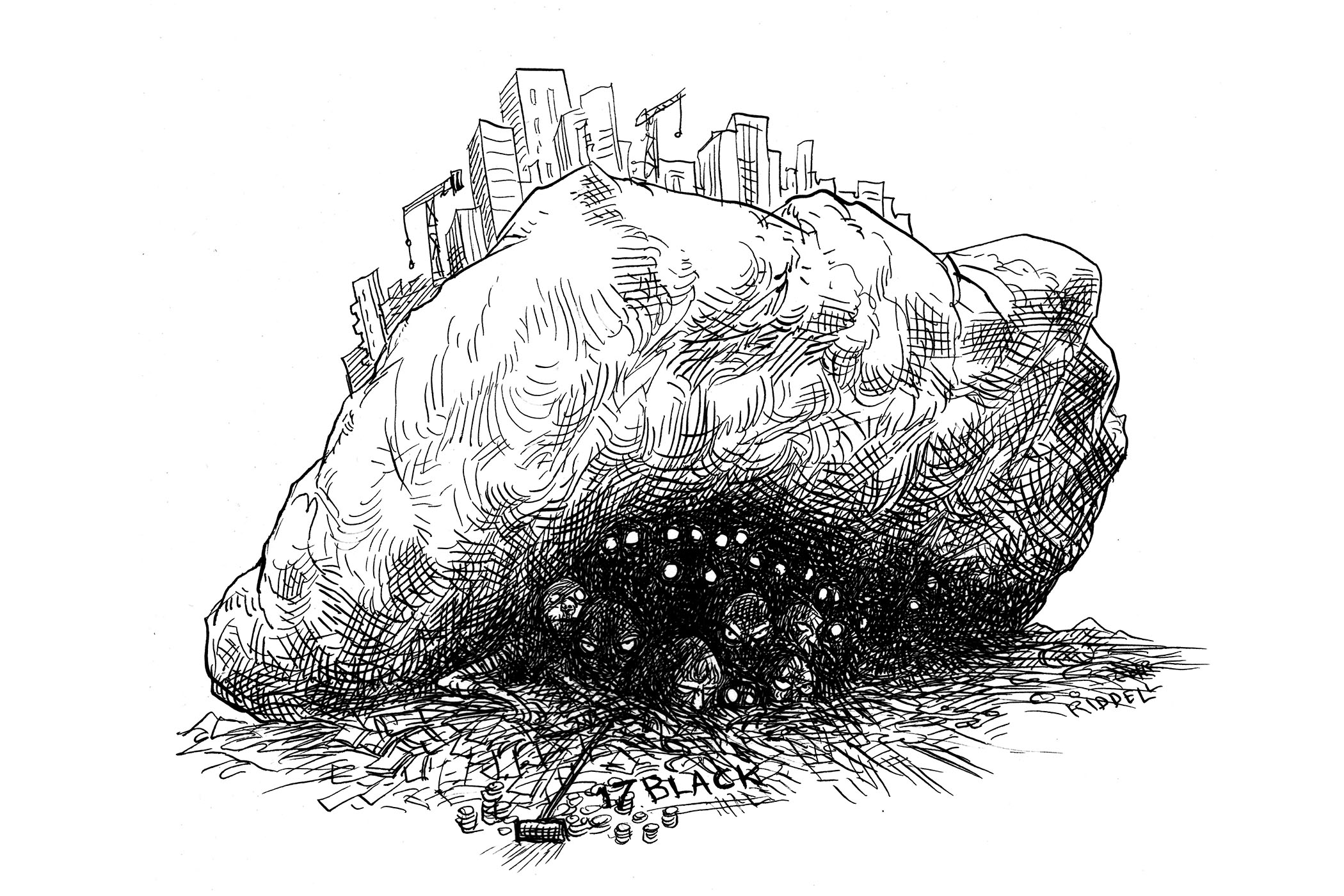
The contrast between the bravery of Daphne Caruana Galizia and the cowardice of Fenech is as shocking as his acquittal. At the time of her murder she was piecing together a paper trail from the Panama Papers document dump. It indicated that Fenech was enriching himself through control of an energy company secured by kickbacks to local officials paid through a secret offshore company called 17 Black, based in Dubai.
Fenech paid Caruana-Galizia's killers and covered up the payment. We know this because he admitted as much to a middleman who secretly recorded him in evidence presented at trial and never seriously rebutted. He knew of the planned murder before it was carried out, and he knew, in time to try to escape Valetta on his yacht, that the middleman was seeking a plea deal with police.
How then could he have been acquitted? Were the jurors intimidated? They were sequestered throughout the trial so as not to be influenced by media coverage or leaned on in any way. But suggestions of jury tampering have started – and won't stop. The EU has no mechanism to expel recalcitrant members. It can only cajole, withhold funds and, in extremis, suspend voting rights The EU has no mechanism to expel recalcitrant members. It can only cajole, withhold funds and, in extremis, suspend voting rights
Evarist Bartolo, a former Maltese foreign minister, has noted that on an island as small as Malta any juror would think twice before crossing someone as powerful as Fenech. Sources close to the prosecution say the contradiction between his acquittal and the mountain of digital evidence of his involvement in the murder raises serious questions about whether legal or procedural irregularities affected the verdict.
The Caruana Galizia family will have to show there were just such irregularities to secure a retrial. The signs are that this will be hard; the bar in Malta is set high for justice and low for impunity. There may be an answer in the wisdom of crowds, which gathered outside the prime minister's office after the trial and shouted 'mafia, mafia'.
There is a reason the EU insists, when assessing would-be members, on a proven ability to prosecute crime as well as functioning democratic institutions and free markets. All three are needed for liberal democracy. If even one erodes, the rot sets in and the slide from illiberal democracy to autocracy or gangsterism – or both – begins.
All these conditions are contagious, which is why Vladimir Putin continually promotes them to Russia's advantage. The EU is ill-equipped to respond. It has no mechanism to expel recalcitrant members. It can only cajole, withhold funds and, in extremis, suspend voting rights in the European Council under Article 7 of its founding treaty. So the council needs to dust off Article 7. Without concrete action, the promise of Roberta Metsola, the Maltese president of the European parliament, that those responsible for this murder will finally be held accountable, will prove no more than empty words. Sign up to newsletters from The Observer
Clear, calm analysis on the stories driving the day's news.
For information about how The Observer protects your data, read our Privacy Policy
Michael McGrath, the EU commissioner responsible for democracy, justice, the rule of law and consumer protection, has so far been silent on the verdict. He needs urgently to say what Brussels is going to do about it, starting by calling for a retrial. If Maltese law requires clear evidence of procedural irregularities to take that step, it is surely lying in plain sight when a jury ignores the evidence before it.
Corruption drains trust in democracy and free markets. Journalists like Daphne Caruana Galizia strive and sacrifice to keep power honest. Malta's courts have strengthened the hands of criminals and thugs, and cemented suspicion of self-dealing in the corridors of power. Getting to the truth of who killed Daphne is about justice and press freedom. It is also existential for the EU as a place of real freedom.
Farage's problem with truth
Nigel Farage appears to believe that saying something is true or untrue makes it so. This is a classic delusion of people with power, and a basic rule of populism: seize the narrative regardless of reality. But it is not how the world works. For instance, two months ago he stated categorically that he had done nothing wrong, nor 'broken the law in any way' in accepting but not declaring a £5m gift from Christopher Harborne. In reality the parliamentary standards commissioner will rule on these two questions, and he may well disagree.
Farage is trying the same tinpot tactic in Boom-gate, the sensational Channel 4 News disclosure by undercover reporters and a bearded American actor that he knowingly accepted tens of thousands of dollars in impermissible US funding for polls that portrayed Reform in a favourable light on the front pages of the Times and the Telegraph . 'Reform has broken no law,' he insisted at his party conference yesterday. 'We take compliance extremely seriously.' But Reform may very well have broken the law, and it plainly takes compliance seriously only in the sense that it is serious about stretching the rules to breaking point. Newsflash: these rules apply to Reform as to any other party. And the truth is not whatever Farage wishes it to be. It is that political credibility is hard-won and easily lost, and he is losing it.
Twenty-five years ago, not without trepidation, Farrar, Strauss and Giroux published Jonathan Franzen's The Corrections . Five years earlier Franzen had upped the ante in an extraordinarily bold essay announcing in advance that he was setting out to revive the Great American Novel as a lens on society and an art form for a substantial readership. He irritated a minority of critics but realised his main goal. The book was – and remains – a hit. Re-reading it a quarter of a century on, Tim Adams finds it eerily prescient on politics and as relevant as ever on what moves people, and trips them up and grinds them down. But in the process of re-reading, he's also reminded of the singular power of great writing to resonate in different ways in different eras. We are bang in the middle of the 150th anniversary of the long serial release of Tolstoy's Anna Karenina . Vronsky redux, anyone?
What are your thoughts on this? Email us at letters@observer.co.uk
Illustration by Chris Riddell for The Observer
Nigel Farage
Justice
Daphne Caruana Galizia
Related Opinion
A note on cookies
Newshunt uses essential cookies to keep you signed in and to remember your language and country, so the site works the way you expect. With your permission, we'd also like to use analytics cookies to understand how people use Newshunt and improve it over time.
Accepting only affects analytics. To learn more, view our Privacy Policy or Terms & Conditions.
(0)Comments