


unknown
Brightest star: Editorial on Uttam Kumar at 100 and Bengali cinema's revival

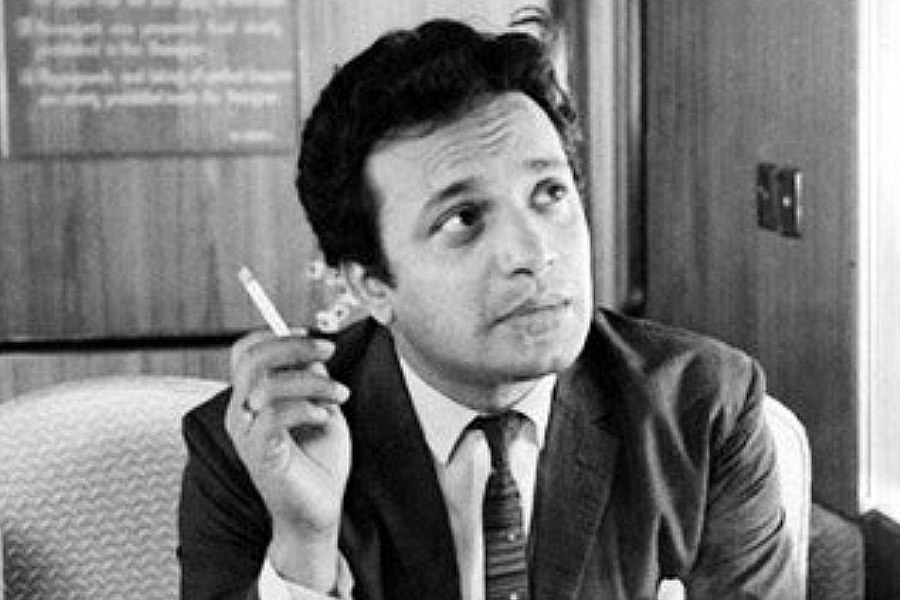
The centennial birth celebrations of Uttam Kumar, still the brightest star in Bengal's celluloid universe, have begun, expectedly, with a flurry of activities. The chief minister, surrounded by members of Bengal's film clan, took part in a tribute and a procession. An exhibition, comprising publicity material and music albums of the films of the matinee idol, was inaugurated at the Gaganendra Pradarshashala. Nandan organised a three-day film retrospective, while India Post released a special cover. Far more intimate and illuminating, though, have been the reminiscences, mostly by veterans who shared slices of real and reel life with the legend. These have shone a spotlight, once again, on various aspects of the actor's persona. For instance, his steely resolve to succeed after suffering the ignominy of a series of flops, his endeavour to improve his craft, the phenomenal success that followed, his productive cinematic partnership with Suchitra Sen, his subsequent forays into Hindi cinema, his quiet solidarity with those in need, his troubled personal life and health, undiminished professionalism — the actor suffered his fatal heart attack on a film set — each aspect of the mahanayak's life continues to be dissected passionately in Bengal.
This feverish fascination lays bare a question for which there are many answers — but, arguably, not a definite one. What are the ingredients of Uttam Kumar's hypnotic appeal? His natural charm and progression as an actor —the versatility of his roles testifies to the latter — offer some clues. Others would suggest that the icon defined, for generations, the contours of both civility and masculinity, a masculinity that was not turbocharged by brawn but by intelligence, refinement and relatability. His ability to represent a quintessential middle-class Bengaliness — with its attendant values, aspirations, moorings — is perhaps the most accurate reason for the hero's perpetual aura in the public eye. Yet, Uttam Kumar's Bengali essence, so central to his unmatched success in the state, did, some suggest, turn out to be his Achilles heel in the world of Hindi films. There is a line of thought that suggests that Chhoti Si Mulaqat, which Uttam Kumar produced and which was a Hindi remake of the Bengali superhit, Agnipariksha, failed miserably because of the cultural chasm that separated the then Bengal from Bombay. That failure had adversarial financial and health consequences for Bengal's first —and only? — superstar.
ADVERTISEMENT
Uttam Kumar's 100th birth anniversary would certainly open the proverbial dam on imaginative and not-so-imaginative tributes. Perhaps the best way to honour the man would be for all stakeholders — the film fraternity, the government and the audience, among others — to try and revive the fortunes of Bengali cinema. In this respect, content needs a radical resurrection in terms of quality so that the ordinary Bengali would return to the sparsely populated cinema halls. Such a sorry sight — a theatre with a handful of people in the audience — would have been unthinkable during Uttam Kumar's heyday.
Related Opinion
A note on cookies
Newshunt uses essential cookies to keep you signed in and to remember your language and country, so the site works the way you expect. With your permission, we'd also like to use analytics cookies to understand how people use Newshunt and improve it over time.
Accepting only affects analytics. To learn more, view our Privacy Policy or Terms & Conditions.
(0)Comments