


Sayan Sen
Top 5 things I miss most about Windows Phone

Yes, you read that right, you are reading about Windows Phone in 2026. No, unfortunately, Windows Phone is not back from the dead. But since it's a Labor Day holiday for our regular news stream, we thought this piece would be a nice walk down memory lane as we reminisce what made Windows Phone so special for millions of people.
Up until Microsoft killed its Windows 10 Mobile efforts in 2019, I was a staunch supporter of the OS. The only smartphones I had purchased were Windows phones, but since I was a teenager engaged fully in academics, I didn't have the money to buy the latest and greatest of what Microsoft and Nokia had to offer. However, as some may be aware, the great thing about Windows phones is that they were quite performant on low-end hardware, so you didn't really need massive amounts of RAM and the latest SoC to enjoy a smooth experience.
Between 2013 and 2019, I owned the Lumia 620 and Lumia 630, and got up until the Developer Preview of Windows 10 Mobile on my Lumia 630 before Microsoft eventually decided not to release the stable version of devices with 512MB of RAM, unfortunately for my Lumia handset. However, during these six years, I was a diehard fan of the OS. Even now in 2026, I occasionally reminisce about Windows Phone and what could have been, so on Labor Day 2026, find out about the five things I still miss about Microsoft's mobile operating system.
I think everyone who ever used a Windows Phone can attest to the fact that it was among the fastest, if not the fastest, pieces of software out there, especially compared to Android phones in the same range. Even if you had 512MB of RAM on the lowest end of the hardware spectrum, performance was one thing you didn't need to worry about.
Windows Phone 7, 8, and 8.1 were simply excellent on low-end hardware, and while Windows 10 Mobile upped the hardware requirements to 1GB of RAM, it's unimaginable now to expect a smartphone to run well on such low amount of RAM. That's just how optimized Windows Phone was.
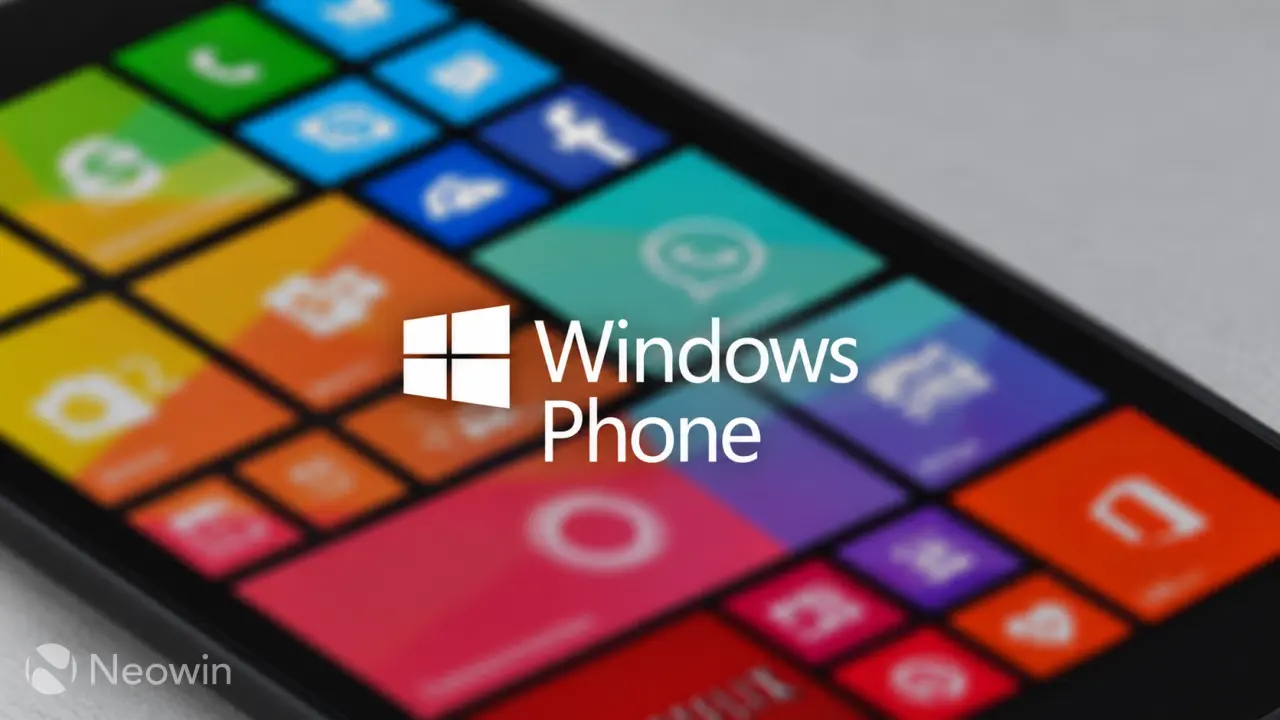
You can't talk about Windows Phone and not mention Live Tiles. This UX, also present in Windows 8 and 8.1, is what defined the mobile operating system. Rather than getting a boring apps list with static icons like what we have today, Microsoft practically revolutionized the interface by introducing tiles which would dynamically update and animate based on various factors.
If you pinned a Live Tile for a weather app, you would get live updates for weather. This is similar to the widgets we have today, but in Windows Phone, app icons and Live Tiles were the same thing, not a separate interface. Admittedly, they weren't perfect because they did involve engagement from app developers, but they were a far more innovative UX than what we have today.
Microsoft was a big proponent of unifying the Windows, Windows Phone, and Xbox experience, and one way it did that was by introducing an Xbox element to the gaming infrastructure in its mobile OS. You could basically access your Xbox profile through a built-in interface in Windows Phone, customize it, and earn Gamerscore for playing Xbox-branded games like Halo: Spartan Assault, Halo: Spartan Strike, and Age of Empires too.
This offered a truly first-class experience and it actually felt like Microsoft cared about its mobile customers because it often went the extra mile to release mobile counterparts for some of its console games and even offered Xbox Live integration with select mobile-first titles too. The idea was that it would get casual gamers to engage with the Xbox ecosystem, which is something that has simply gone away in today's era.
Windows Phone's keyboard was simply excellent. It didn't have a lot of customization options (or at least that's what I remember), but it was quite fast, accurate, and good at word prediction. Swipe typing was great at that time, and felt very responsive. I miss it to the point that whenever I purchase a new Android smartphone, I try to set it up to be similar to what I had on Windows Phone, via Google's Gboard. Of course, Google's option is quite good too, but I think that's also because I try to set up key spacing and the swipe typing experience to be very similar to the Windows Phone 8.1 default.
Windows phones, especially those in the Nokia/Microsoft Lumia series tended to stand out from the crowd. This was primarily due to their striking color cases which brought a certain vibrance to the atmosphere whenever they were brandished from someone's pocket. You couldn't help but notice a Lumia phone.
Remember the iconic yellow Nokia Lumia 1020? These devices typically showcased a lot of personality and while some modern handsets are trying to replicate that feeling through one-off bright colors, with Nokia Lumia Windows Phones, that was the norm, not the exception.
Of course, Windows phones had other stand-out features for the time too, such as exceptional camera hardware, unique designs, and Cortana support. But I do feel that we have the same, and perhaps even better, replacements now, so those are not qualities that I miss that much.
Are there any Windows Phone features that you still miss? Let us know in the comments section below!
Related Opinion
A note on cookies
Newshunt uses essential cookies to keep you signed in and to remember your language and country, so the site works the way you expect. With your permission, we'd also like to use analytics cookies to understand how people use Newshunt and improve it over time.
Accepting only affects analytics. To learn more, view our Privacy Policy or Terms & Conditions.
(0)Comments