


Abdul Hamid Ahmad
Mohammed bin Rashid to Mohamed bin Zayed: When a nation is trust, not inheritance
Opinion
'Preserving a nation does not mean preserving it in the form in which it once existed; it means preserving its capacity to evolve'
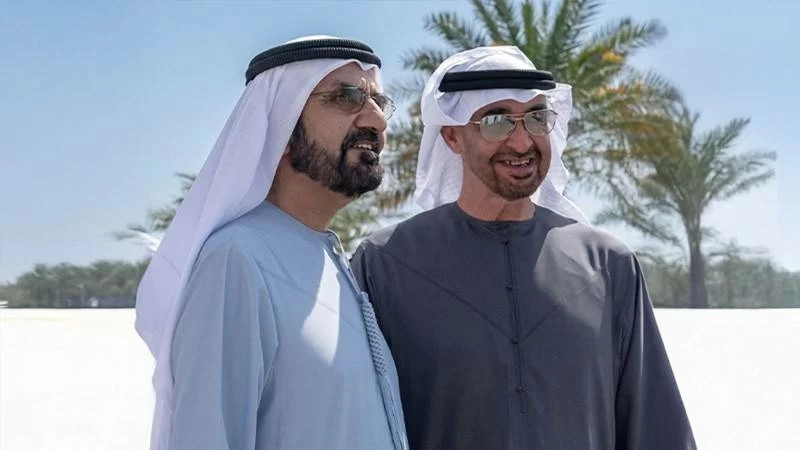
The significance of the letter addressed by His Highness Sheikh Mohammed bin Rashid Al Maktoum to his brother, His Highness Sheikh Mohamed bin Zayed Al Nahyan, lies not simply in the fact that it is a letter from one leader to another, or from a brother and a long-standing partner in the nation's journey to another.
The significance of the letter addressed by His Highness Sheikh Mohammed bin Rashid Al Maktoum to his brother, His Highness Sheikh Mohamed bin Zayed Al Nahyan, lies not simply in the fact that it is a letter from one leader to another, or from a brother and a long-standing partner in the nation's journey to another. Its deeper significance, in my view, is that it distils into a few words a profound philosophy about building nations and ensuring their continuity: how achievement becomes a responsibility, how an inheritance becomes a trust, and why it is not enough for each generation to preserve what it has inherited; it must add to it before handing it on.
What makes the letter particularly significant is the choice of Sheikh Mohamed bin Zayed as its recipient. Sheikh Mohammed bin Rashid is not writing to the President of the UAE alone, but to his 'brother, friend and partner in the journey', recalling decades of shared work and a national journey that began with the building of the Union and continued through the transformation of the UAE into a modern and influential state.
Yet what is striking about the letter is that it begins with people, not figures or achievements. It moves from the image of a young girl dreaming that her future in her country will be a great one, to children going to school each morning in security, safety, comfort and peace of mind. Here, Sheikh Mohammed bin Rashid sets out a profoundly important measure of national success: that a country succeeds when it gives its children confidence in the future before they are old enough to see that future for themselves.
From this point, the letter moves to a larger question: What happens to nations after they succeed?
One of its most striking passages provides the answer: 'Life has taught me, my brother, that civilisations do not decline by chance. They decline when they stop evolving and when they become satisfied with the achievements of the past.'
This is not merely an observation about history. It may well be the central idea of the letter. Nations do not always decline because they fail. Their decline can begin when they succeed and then become complacent about that success, when what they have achieved becomes a reason to stop competing, innovating and renewing themselves.
This is why Sheikh Mohammed bin Rashid speaks of Sheikh Mohamed bin Zayed as having inherited a great nation from Sheikh Zayed, yet having 'not stopped and not been satisfied.' Instead, he strengthened its stability, diversified its economy, deepened its relationships and pushed it towards the 'new frontiers of human knowledge.'
Here lies one of the letter's most important political and intellectual messages: preserving a nation does not mean preserving it in the form in which it once existed; it means preserving its capacity to evolve.
In this vision, stability is not the opposite of change; it is the foundation that makes change possible. Economic success becomes a guarantee of the future only when it is accompanied by diversification, investment in people and the ability to enter new fields.
But Sheikh Mohammed bin Rashid goes further, pointing to a danger that may be quieter than any external threat: comfort.
He warns of 'the comfort that gradually enters the minds of young people when they move from a culture of achievement to a culture of entitlement.'
This sentence deserves particular reflection. A country can build world-class universities, airports and projects and achieve impressive rates of growth, but all of this becomes vulnerable if a new generation comes to regard what has been achieved as an entitlement rather than the result of the effort and sacrifices of previous generations.
This brings us to the sentence that perhaps best captures the philosophy of the letter: 'What we inherited is not a reward, but a trust that we must add to before handing the baton to those who come after us.'
There is considerable depth in this way of looking at national wealth and achievement. What has been inherited does not belong exclusively to one generation, nor is it a prize awarded to its children simply because their parents succeeded. It is a temporary trust. The generation that receives it does not merely have the right to enjoy it; it has a responsibility to develop it and hand it over in better shape.
That is why Sheikh Mohammed bin Rashid does not stop at the goal of creating wealth. He raises it to a higher level: creating generations capable of creating wealth and shaping the future.
Here, people become more important than wealth itself. Money can create opportunities, but it is people who preserve those opportunities, multiply them and create new ones when circumstances change.
The letter ultimately returns to the meaning of leadership itself: 'A person is not measured by the powers he possesses, but by the responsibilities he carries.'
This may be its most important conclusion. Power, in this vision, is not so much a privilege as a burden and a responsibility. A leader is not measured by the powers at his disposal, but by the confidence he leaves in the hearts of his people, the institutions he builds and the future he prepares for generations that have not yet been born, or have not yet grown up.
That is why Sheikh Mohammed bin Rashid's letter to Sheikh Mohamed bin Zayed is, at its heart, a message to more than one person. It is a message to an entire generation: Do not measure your success by what you inherited, but by what you add to it. Do not regard stability as the end of the journey, but as the condition that allows the journey to continue. And do not allow achievement to become a reason for complacency, because civilisations do not decline by chance; they decline when they stop evolving.
Perhaps this is why Sheikh Mohammed bin Rashid chose to address Sheikh Mohamed bin Zayed in this deeply personal and reflective letter. He is writing to his long-standing partner in the journey, but in truth, he is also writing to us and to the future.
The flag is not meant to be handed over unchanged. Trust does not simply mean preserving what we inherited; it means adding to it so that those who come after us are better equipped to continue the journey.
That may be the deepest message that remains after the letter has been read.
---
Abdul Hamid Ahmad is a UAE Writer and Columnist
Related Opinion
A note on cookies
Newshunt uses essential cookies to keep you signed in and to remember your language and country, so the site works the way you expect. With your permission, we'd also like to use analytics cookies to understand how people use Newshunt and improve it over time.
Accepting only affects analytics. To learn more, view our Privacy Policy or Terms & Conditions.
(0)Comments