


Le Monde
Germany's political model is threatened by the far right

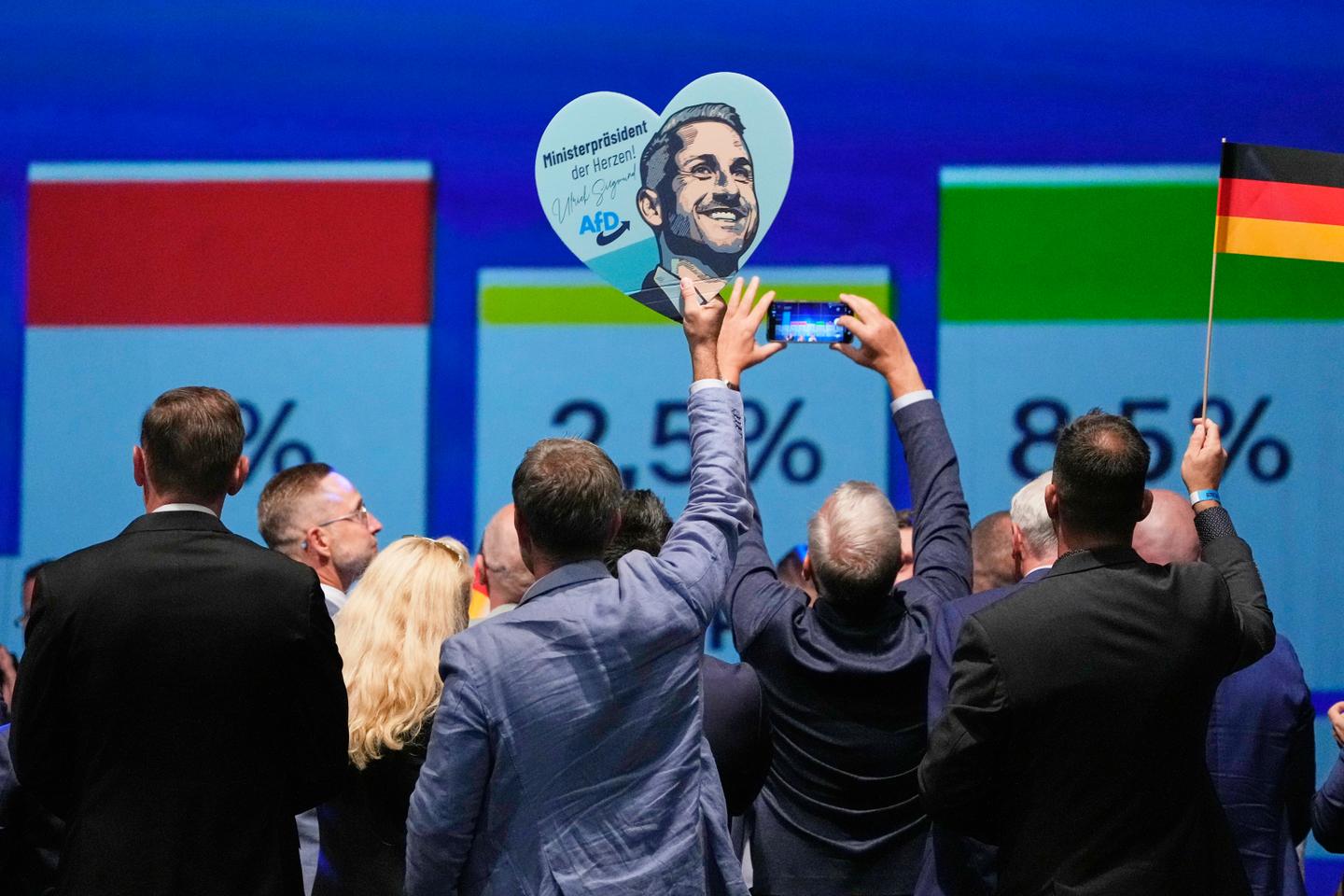
The result was expected, but not its magnitude. By winning around 44% of the vote in the Saxony-Anhalt regional elections on Sunday, September 6, the far-right Alternative for Germany (AfD) more than doubled its 2021 result. Meanwhile, the conservative Christian Democratic Union (CDU), Chancellor Friedrich Merz's party, fell to around 17%, half its score from five years ago. Never since the end of World War II had a far-right party won a regional election in Germany.
For Merz, the setback stings. When he ran for the CDU presidency in 2018, he presented himself as the man who could halve AfD's score. Eight years later, the far right polls at around 28% nationally, while the CDU barely surpassed 20%. The lesson is harsh: Despite taking much more conservative positions than during Angela Merkel's era (2005-2021), and even after significantly tightening Germany's migration policy since being elected chancellor in May 2025, Merz has not halted the far right's momentum. He has fueled it.
Although the AfD fell short of an outright majority and could not govern alone, its historic surge has made forming a stable coalition exceptionally difficult. It will also put intense pressure on Germany's other political parties' long-standing refusal to cooperate with the far right. So far, that barrier has held. But within the CDU, pressure has peaked, and the coming weeks will serve as a crucial test.
Cooperating with the AfD would mark a rupture for the party of Konrad Adenauer, Helmut Kohl and Merkel. Unlike other far-right parties in Europe, the AfD had never sought to soften its image or move toward the mainstream. Its platform for Saxony-Anhalt proposes, among other things, abolishing the fundamental right to asylum, excluding students with disabilities and refugee children from schools, promoting "the traditional family, consisting of the father, the mother, and as many children as possible," and revising history education to put an end to "national masochism" and the "perpetuation of a neurosis" around Nazism.
Sunday's result will please two men. Russian President Vladimir Putin, first, since the leading European economic power continues to see the growth of a party eager to lift sanctions against Moscow, stop supporting Kyiv and resume buying Russian gas. Second, US President Donald Trump, whose camp continually denounces the ostracism of European nationalist right-wing parties and portrays the AfD as a force unfairly kept from power.
It might be tempting to find reassurance in the fact that Saxony-Anhalt, with its 2.1 million inhabitants, accounts for only 2.5% of Germany's population. That would be a mistake. When a party of this nature gains nearly half the votes by defending such a radical, xenophobic, and nationalist program, while the main governing party collapses, it is not a local accident: It signals that a political model – the postwar German model based on rejecting the extremes and prioritizing consensus – is teetering. All of Europe has reason to worry.
Related Opinion
A note on cookies
Newshunt uses essential cookies to keep you signed in and to remember your language and country, so the site works the way you expect. With your permission, we'd also like to use analytics cookies to understand how people use Newshunt and improve it over time.
Accepting only affects analytics. To learn more, view our Privacy Policy or Terms & Conditions.
(0)Comments