


Juan Williams
Opinion: Why Tuskegee University's new dress code matters

The Hill is a top US political website, read by the White House and more lawmakers than any other site -- vital for policy, politics and election campaigns.
thehill.com
By Juan Williams , 2 hours ago
President Trump's war in Iran has no end in sight. Bond markets are flashing ominous signs. And the midterm elections are less than 60 days away.
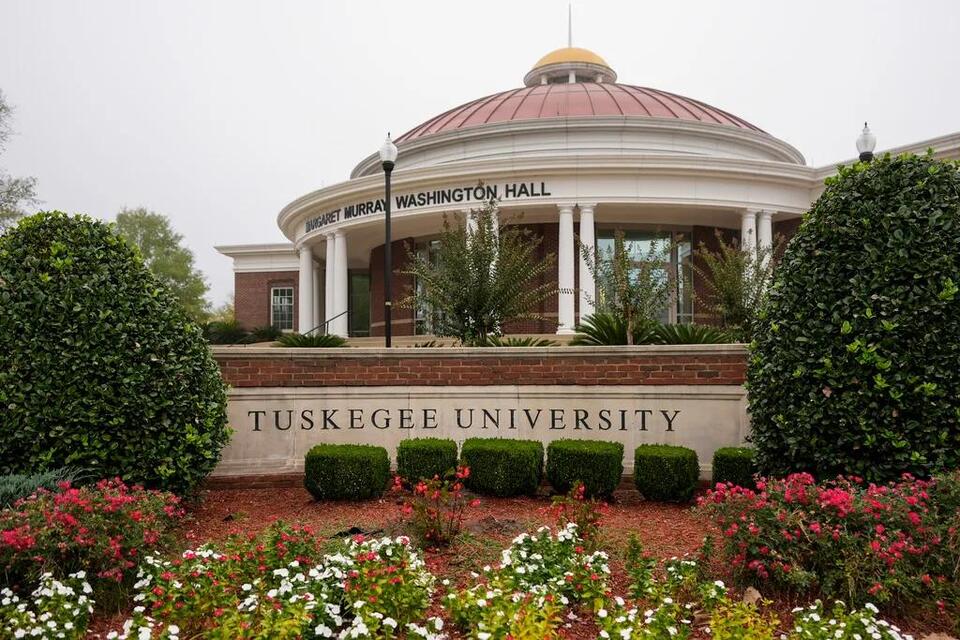
In this time of anxiety, the dress code at Tuskegee University in Alabama might seem like a small matter. It isn't.
Tuskegee recently told its mostly Black students to stop wearing revealing clothes to class, or at university events. School leaders also insisted they turn off cell phones in class. And the school also put a stop to students dressing down by wearing durags.
Mark A. Brown, the school's president, said at start of the school year he is sending a clear message: He wants to end habits that hurt any Black youngster's chances for success. He is educating young Black people to defy self-defeating images of themselves as thugs.
In refreshingly direct terms, Brown said, "The only need we feel is to prepare students to be successful: That's it."
As President Trump punishes diversity efforts at universities and corporations, Tuskegee's strong message to young Black people is simple — they cannot afford any self-imposed handicaps.
Feeding stereotypes with jailhouse-inspired fashion choices is a self-imposed handicap. Feeding negative, ugly assumptions tying young Black people to crime and violence is a self-imposed handicap.
A reminder of self-imposed handicaps flashed nationwide last week with the conviction of a Black man for killing the Black rapper Tupac Shakur. The New York Times described Shakur as a "socially conscious poet on his way to becoming a cultural icon." But he was derailed, the paper reported, as he allowed his fame to become "increasingly associated with violence and gang culture."
The same slide into gangster life later took the life of another rapper, Christopher Wallace, better known as "Notorious B.I.G."
Those young stars died nearly 30 years ago. But negative stereotypes about "authentic" Black life replicating jailtime are heavily promoted in rap music and fashion — the durags and pants that hang low after belts are confiscated.
Tuskegee is standing up to this lie by giving its students practice in professional dress and habits that lead to success.
Twenty years ago, I wrote a book, a New York Times best-seller, "ENOUGH," that called out Black activists, along with educators, for not confronting negative cultural messages about Black youth in music and fashion.
I argued that too many traditional Black leaders had lost sight of the original purpose of the civil rights struggle: improving the lives of Black Americans.
With prominent voices muzzled, the popular culture continues to elevate hip hop even as it goes about normalizing the N-word, degrading Black women and celebrating the destructive fantasy of 'Gangsta' life.
Hip Hop led to 'Gangsta' rap and then to drill music — music whose very name evokes Black people killing Black people.
I even took that argument onto Oprah Winfrey's show, where I confronted rapper Ice-T over rap lyrics that glorified violence and sexual degradation. One dissenter derided me as a "hip-hop scold of the highest order."
Maybe so, but I had company. Before he became president, Barack Obama, as a U.S. senator in 2008, said too many Black men were under the influence of negative stereotypes and failing as fathers and husbands. He said they were "acting like boys instead of men … families are weaker because of it."
As president in 2013 he spoke at Morehouse College and delivered a similarly direct message: "Be the best husband to your wife, or boyfriend to your partner, or father to your children that you can be, because nothing is more important."
His challenge to Black America was criticized by some of the same old-guard critics I challenged in "Enough."
They also lambasted comedian Bill Cosby for his speech at the 2004 anniversary celebration of the Supreme Court ruling ending legal school segregation in Brown v. Board of Education.
Cosby said Dr. Martin Luther King Jr. and Thurgood Marshall had sacrificed, even gone to jail, to fight racial segregation and open doors to success for Black America. He said modern-day white racism was not the principal reason for high rates of truancy from school and failure to graduate. The problem, he said, was that poor people 'are not holding their end in this deal.'
We later learned that Cosby was in no position to lecture anyone about morality or the treatment of women. His fall from grace destroyed his credibility as a messenger.
But it did not — and does not — invalidate his message.
In fact, his words are more salient today because they are harder to hear in a world of political messages dominated by Trump. Now any call for personal responsibility in Black America gets confused with partisan politics and ideological purity. It shouldn't be.
Standards are not racist. Discipline is not disrespectful of Black culture. Black lives do matter.
This is especially true as artificial intelligence makes the job market the most competitive it has been in decades.
Booker T. Washington, Tuskegee's founder in the days after the Civil War, understood that education was not simply the acquisition of knowledge. It was about preparing Black students to live with independence, dignity and success.
In 2026, Tuskegee is not surrendering to popular stereotypes. It is preparing young people to win.
That is why what Tuskegee is doing today matters.
Juan Williams is senior political analyst for Fox News Channel and a prize-winning civil rights historian. He is the author of the new book ' New Prize for These Eyes: The Rise of America's Second Civil Rights Movement . ' Copyright 2026 Nexstar Media, Inc. All rights reserved. This material may not be published, broadcast, rewritten, or redistributed.
For the latest news, weather, sports, and streaming video, head to The Hill.
Related Opinion
A note on cookies
Newshunt uses essential cookies to keep you signed in and to remember your language and country, so the site works the way you expect. With your permission, we'd also like to use analytics cookies to understand how people use Newshunt and improve it over time.
Accepting only affects analytics. To learn more, view our Privacy Policy or Terms & Conditions.
(0)Comments