


unknown
Meet the Modern Battlefield, Same as the Old Battlefield

Commentary
The above title pays homage to the Who's 1971 hit, 'Won't Get Fooled Again,' which states, 'meet the new boss, same as the old boss.' This reflects the biblical maxim found in Ecclesiastes that when it comes to human nature, 'there is nothing new under the sun.' Sadly, history and current events tell us that war is definitely part of human nature.
Hence, while the tools and methods of combat evolve with every generation, the underlying factors that decide victory and defeat remain stubbornly constant. Military theorists have long distinguished between the character of war—the ever-shifting tactics and technology of the moment—and the nature of war, the permanent human, geographic, and political forces that persist from age to age.
As the strategist Colin S. Gray observed, 'War has a constant nature, but an ever-changing character.' Central to that enduring nature is a harsh historical lesson: technological superiority will rarely be decisive when similarly advanced countries clash, and wars are ultimately won by the side that can commit greater manpower and resources over time.
Moreover, warfare itself sits on the same continuum as diplomacy; it is not a separate realm but an extension of political intercourse.
Carl von Clausewitz captured this with enduring clarity: 'War is merely the continuation of policy by other means.' He elaborated saying war 'does not suspend political intercourse or change it into something entirely different. In essentials that intercourse continues, irrespective of the means it employs.' Diplomacy, economic pressure, and armed force are instruments on a single spectrum of statecraft, used to compel an adversary to accept one's will.
The modern battlefield, however crowded with drones and algorithms, remains part of that age-old continuum.
Tactics and technology change, and every era believes its innovations will rewrite the rules. In the twelfth century, the crossbow allowed a common soldier to defeat a chain mail-clad knight at range, temporarily undermining the battlefield dominance of the mounted aristocracy.
Gunpowder later rendered high stone castles obsolete, only for engineers to answer with low, angled star forts. Firearms' ability to penetrate even the highest quality plate armor led to the end of the armored knight, yet modern body armor often allows a soldier to take a direct hit and keep fighting. The machine gun and the massed modern artillery of World War I produced the industrial slaughter of the trenches; and then the tank, aircraft, and radio brought back maneuver warfare.
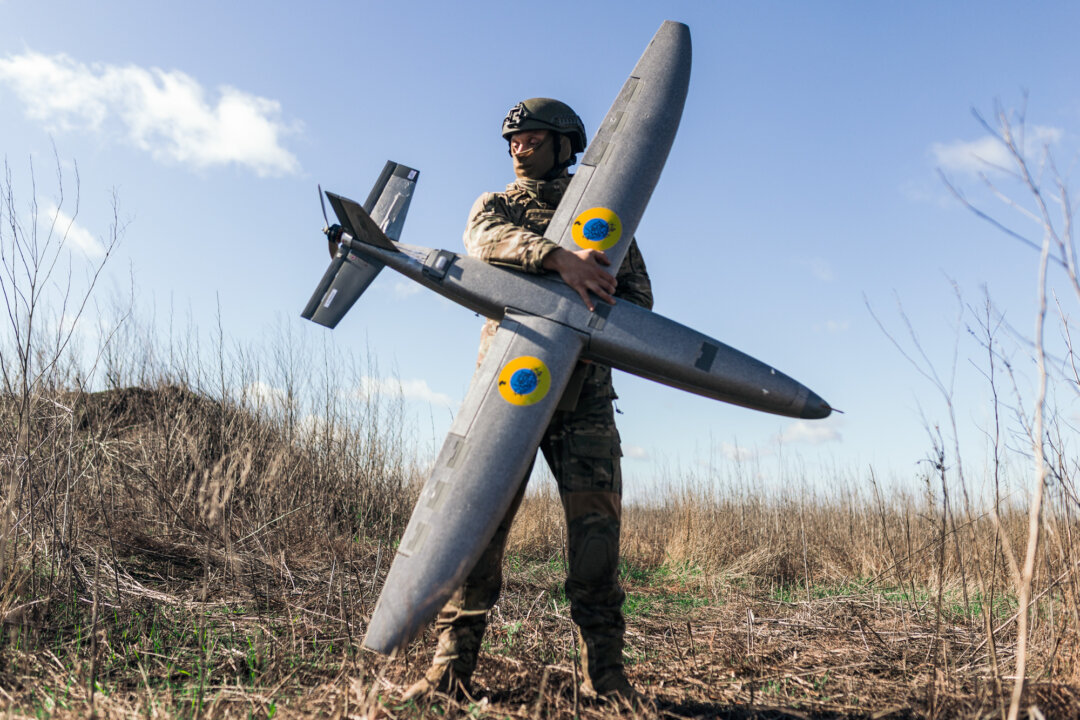
Today, cheap FPV drones, artificial intelligence, and persistent satellite coverage have again transformed daily combat back into the grinding war of attrition that each week results in more casualties and death than all of the current U.S.–Iran conflict. Mass-produced quadcopters provide continuous surveillance, inexpensive explosives disable multimillion-dollar armored vehicles, and AI-assisted targeting compresses decision cycles from hours to seconds.
Electronic warfare, cyber tools, and multi-spectral decoys further complicate the battlefield. The character of war is ever-changing, with the race to invent, deploy, and counter new means of killing being one of mankind's oldest constants.
Yet these revolutions leave the basic structure of conflict untouched. While conflicts between peoples of vastly different technological sophistication can see technology play a decisive role, we also have many examples of technologically inferior opponents adapting and fighting their technologically superior opponent to a draw or even forcing them to give up.
In conflicts between peer or near-peer competitors, initial technological advantages rarely last long enough to make a decisive difference, as they are inevitably captured, reverse-engineered, and/or countered via clever tactics. In the Ukraine-Russia conflict, we have seen the half-life of the advantage provided by new drones and technology reduced to mere months or even weeks. And what we are left with is a grinding war of attrition that looks depressingly like what men were forced to endure in World War I, over 100 years ago.
A classic illustration of the impact of technology and tactics is Nazi Germany's early successes in World War II. Superior tactics, the Blitzkrieg combining tanks, aircraft, and radio coordination, and advanced technology initially overwhelmed opponents across Europe. Yes, Germany's superior tactics and technology were decisive early on, yet the United States and its allies, including Russia, rapidly learned to counter those tactics, adapted and co-opted the underlying technologies, and then overwhelmed Germany through vastly greater mass production and manpower. German dominance evaporated under the weight of massive Allied industrial output and manpower.
What history shows is that in the long run the outcome is decided by the capacity to commit and sustain superior manpower and material resources. War remains a contest of attrition and will. A nation that can replace losses faster, keep factories running longer, and absorb economic and demographic pain will be able to overcome and counter what more often than not ends up being only temporary technological superiority.
Geography still channels armies through the same mountain passes, river crossings, and open plains that constrained Caesar or Napoleon. Logistics remains decisive: fuel, ammunition, food, and spare parts must still move across contested ground, and weather—mud, snow, fog, rain—still grounds drones, degrades sensors, and strands vehicles.
The 'exquisite' gold-plated, extremely expensive platforms prized by modern Western militaries illustrate the enduring risk of over-engineering. Indeed, complex, costly systems that cannot be produced or repaired at scale become liabilities the moment the adversary adapts, and the fight turns into a grinding contest of mass.
This is not to say that battlefield innovations aren't significant, but that they are nothing new. Each innovation follows a predictable cycle of disruption, shock, adaptation, and normalization. Temporary technological advantages evaporate as the opponent copies, counters, or adapts to its presence or use.
The modern battlefield, crowded with autonomous systems and real-time data feeds, still confronts the soldier with mud, fear, uncertainty, and the requirement to seize and hold ground with human bodies. Sure, technology alters the speed, range, and precision of violence, yet with each side developing, copying, or stealing it, it can't be counted on to provide the winning advantage.
What still wins is the sustained commitment of manpower and resources, the capacity to absorb losses, replace them, and continue the fight.
Warfare remains, as it has always been, part of the same continuum of political intercourse that includes diplomacy.
The technology changes, but men fighting and dying in miserable circumstances doesn't. Of course those who are bedazzled with new technology will be fooled once again in to thinking the nature of warfare has changed. It hasn't.
Meet the modern battlefield, same as the old battlefield.
Views expressed in this article are opinions of the author and do not necessarily reflect the views of The Epoch Times.
Related Opinion
A note on cookies
Newshunt uses essential cookies to keep you signed in and to remember your language and country, so the site works the way you expect. With your permission, we'd also like to use analytics cookies to understand how people use Newshunt and improve it over time.
Accepting only affects analytics. To learn more, view our Privacy Policy or Terms & Conditions.
(0)Comments