


Mary Assunta
Holding Harmful Industries Liable for Harm to Human Life and the Environment

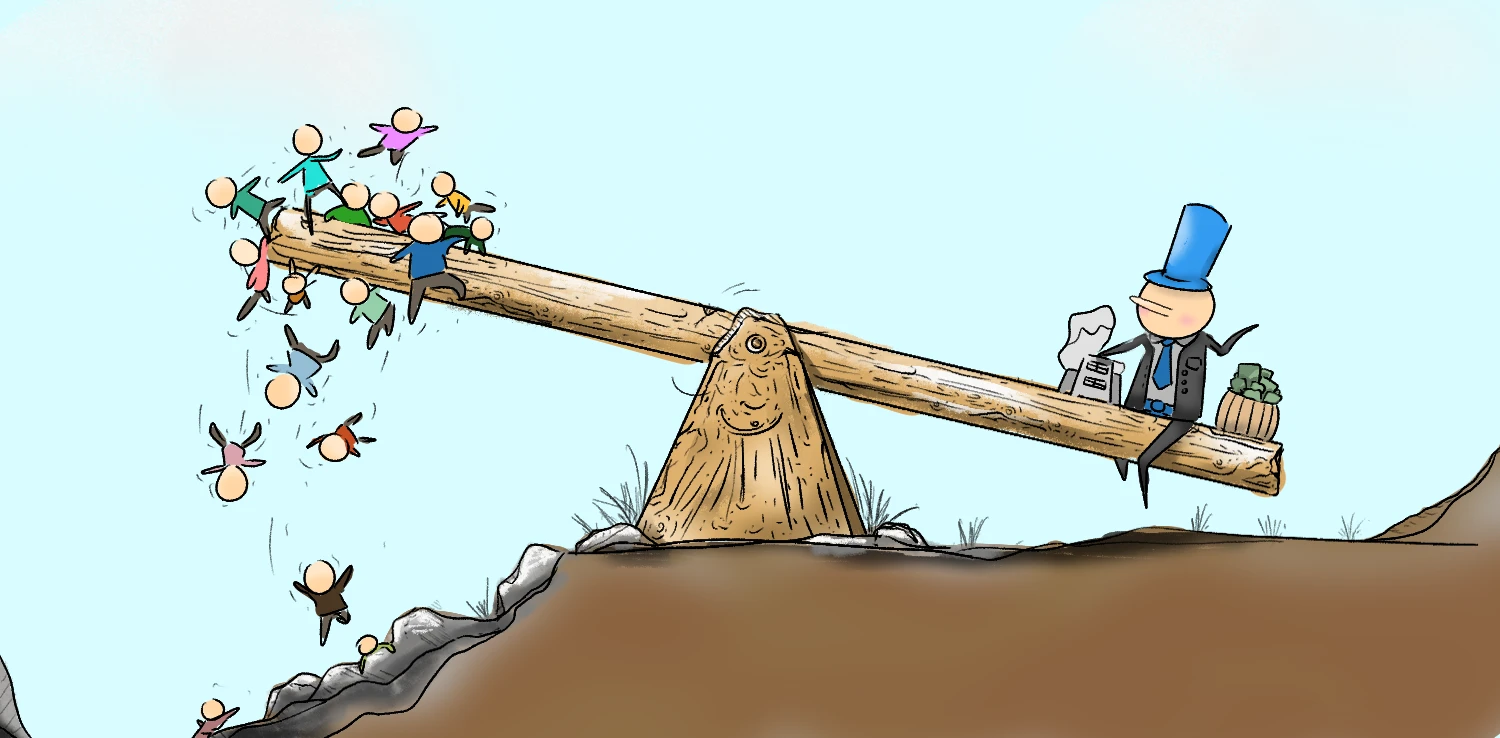
For at least a century, harmful industries have operated on a single financial calculation: privatize trillions in profit, and leave taxpayers to bear death and toxic fallout. From leaded petrol to asbestos to tobacco, these industries have rigged the systems to allow them to thrive unchecked.
Leaded petrol was not merely an automotive issue, but also a source of widespread environmental contamination. Similarly, asbestos is not solely an occupational-health issue. Its extraction, use, demolition, and disposal generate long-term environmental hazards. These harmful industries accrued profits while governments, consumers, and future generations absorbed the associated harm and cost.
Leaded petrol was in circulation for about 100 years before it was completely phased out in 2021. General Motors created it and knew of its neurotoxic risks since the 1920s. After a long fifty years, in 1973, the U.S. Environmental Protection Agency finally announced rules to phase out leaded gasoline to protect public health.
Evidence indicated that lead emissions contaminated air, soil, water, and food resulting in significant neurological and cardiovascular harm, particularly among children. Still, science did not seem to be enough. In 2002, the United Nations Environment Programme (UNEP) initiated a global elimination campaign when 117 countries continued to use leaded petrol. This campaign integrated scientific evidence, public education, technical assistance, and international pressure. It was completely phased out globally when Algeria, the final country still using it, ended sales in 2021. UNEP estimated that this action prevented more than 1.2 million premature deaths annually and yielded substantial economic benefits.
The petroleum and additive manufacturing industries, including General Motors which commercialised leaded petrol use, faced virtually no direct legal liability or financial penalties for the global public health crisis it caused. This ending came about despite internal archives showing they suppressed safety warnings. Instead of a court-mandated restitution, its total global elimination occurred through gradual environmental regulations and public health bans.
Asbestos tells a slightly different but equally important account of harm to society. The asbestos industry was also economically significant, valued at its peak at approximately US$1.5–2 billion per year globally in direct production and trade. The sector had far greater downstream value embedded in construction materials, insulation, shipbuilding and manufacturing supply chains.
For decades, the industry argued that chrysotile asbestos could be used safely under controlled conditions. Meanwhile, governments worried about employment, trade, and the economic consequences of its prohibition.
Denmark was the first country to introduce restrictions in 1972, followed by Iceland and Norway in the 1980s. In the early 1990s, Italy, the Netherlands, and Germany banned asbestos. The consequences were real and fatal. Unregulated use led to thousands of annual deaths from lung cancer, asbestosis, and mesothelioma. The scientific consensus was that all forms of asbestos—including white asbestos (chrysotile)—are dangerous and cannot be used safely even through 'controlled use'.
Driven by health crises, France banned asbestos in 1997. Canada, then the world's third-largest producer and primary exporter of white asbestos (chrysotile) to France, challenged the French measure through the World Trade Organization (WTO) dispute settlement system. They argued that the prohibition was inconsistent with international trade rules. The WTO panel and Appellate Body ultimately rejected Canada's challenge, establishing that protecting human life takes legal precedence over corporate trade interests.
The economic toll of leaded petrol was estimated in the trillions of dollars, through healthcare costs and societal impacts. The amount was absorbed entirely by public health systems and populations, rather than the corporations responsible for it and profiting from its production.
Unlike petroleum, the asbestos industry faced a record $100 billion payout, bankrupting dozens of multi-billion-dollar companies. This was a move that rewrote corporate accountability forever. Currently, over 60 active asbestos trusts hold tens of billions of dollars. These trusts operate independently of the original companies, specifically designed to pay out financial compensation to victims of mesothelioma and lung cancer both now and into the future.
The sheer volume of personal injury lawsuits overwhelmed the corporate balance sheets. To protect themselves from completely dissolving, over 100 major asbestos corporations filed for Chapter 11 bankruptcy protection. It was a strategy to stay in business but avoid being held accountable for their actions, since bankrupt companies could not be sued.
While the petroleum industry avoided liability entirely, the asbestos industry challenged the governments' action intended to protect people. They consistently employed economic, employment, and trade arguments to defend the products they knew early on were harmful.
Tobacco follows the pattern of an industry that has aggressively protected its harmful business practices. But it is unique in that it has no use, only devastating harm. According to the World Health Organization (WHO), tobacco kills more than seven million people every year, including more than 1.6 million non-smokers exposed to second-hand smoke. The scale of its harm on society and the environment already exceeds that of leaded petrol and asbestos combined.
Tobacco claimed 100 million lives in the 20th Century. Evidence of its harm first emerged in the late 1950s. Then, the risk of lung cancer from smoking was officially established in the 1964 US Surgeon General's report. Since then, over the past 60 years, the industry has launched a series of activities to hide the truth, mislead its customers, and evade or undermine government regulations.
In 1994, the CEOs of the seven largest U.S. tobacco companies testified under oath before the U.S. House of Representatives that nicotine was not addictive. Soon after, the industry's master deception was exposed. In 1998, 52 states/territories signed the Master Settlement Agreement for about $206 billion (2000–2025) with the largest tobacco companies in the U.S. to settle dozens of state lawsuits brought to recover billions of dollars in health care costs associated with treating smoking-related illnesses.
The causal relationship established between smoking and lung cancer has been established. Numerous cases have been filed for compensation to its sick customers. Yet, the industry continues to reject liability and compensate those harmed by its products.
The global tobacco industry, which operates in practically every country, is valued at over US$800 billion. Meanwhile, costs to society are estimated at $1.4 trillion to $1.85 trillion annually in combined healthcare expenditures and lost productivity.
Moreover, the tobacco industry is also associated with deforestation, significant water consumption, greenhouse-gas emissions, and generation of enormous amounts of waste. Cigarette butts are one of the world's most pervasive forms of litter, with an estimated 4.5 trillion discarded improperly every year. Taxpayers and local authorities generally bear the cost of collecting, transporting, and disposing of this waste. Cigarette butts cost an estimated US$25.7 billion in annual waste-management burden globally. In the ASEAN region, the estimated burden is over US$8 billion annually. Indonesia alone bears about 35% (US$3 billion) of this waste.
For starters, instead of assigning these costs to municipalities and taxpayers, governments could implement producer-responsibility schemes requiring tobacco manufacturers and importers to pay for the collection, clean-up, and safe disposal of cigarette butts. Alas, this industry continues to profit from selling a harmful product, transferring the full cost of its consequences to the public and the government. The taxes attributed to the industry are practically paid for by its customers.
Until statutory frameworks compel harmful industries to internalize the cost of their actions, society will remain trapped in a rigged economic model where corporations hoard the wealth and humanity pays with its health, environment, and lives.
Editor: Nazalea Kusuma
Amidst today's increasingly complex global challenges, equipping yourself, team, and communities with interdisciplinary and cross-sectoral insights on sustainability-related issues and sustainable development is no longer optional — it is a strategic necessity to stay ahead and stay relevant. Join Membership Partner with Us
Related Opinion
A note on cookies
Newshunt uses essential cookies to keep you signed in and to remember your language and country, so the site works the way you expect. With your permission, we'd also like to use analytics cookies to understand how people use Newshunt and improve it over time.
Accepting only affects analytics. To learn more, view our Privacy Policy or Terms & Conditions.
(0)Comments